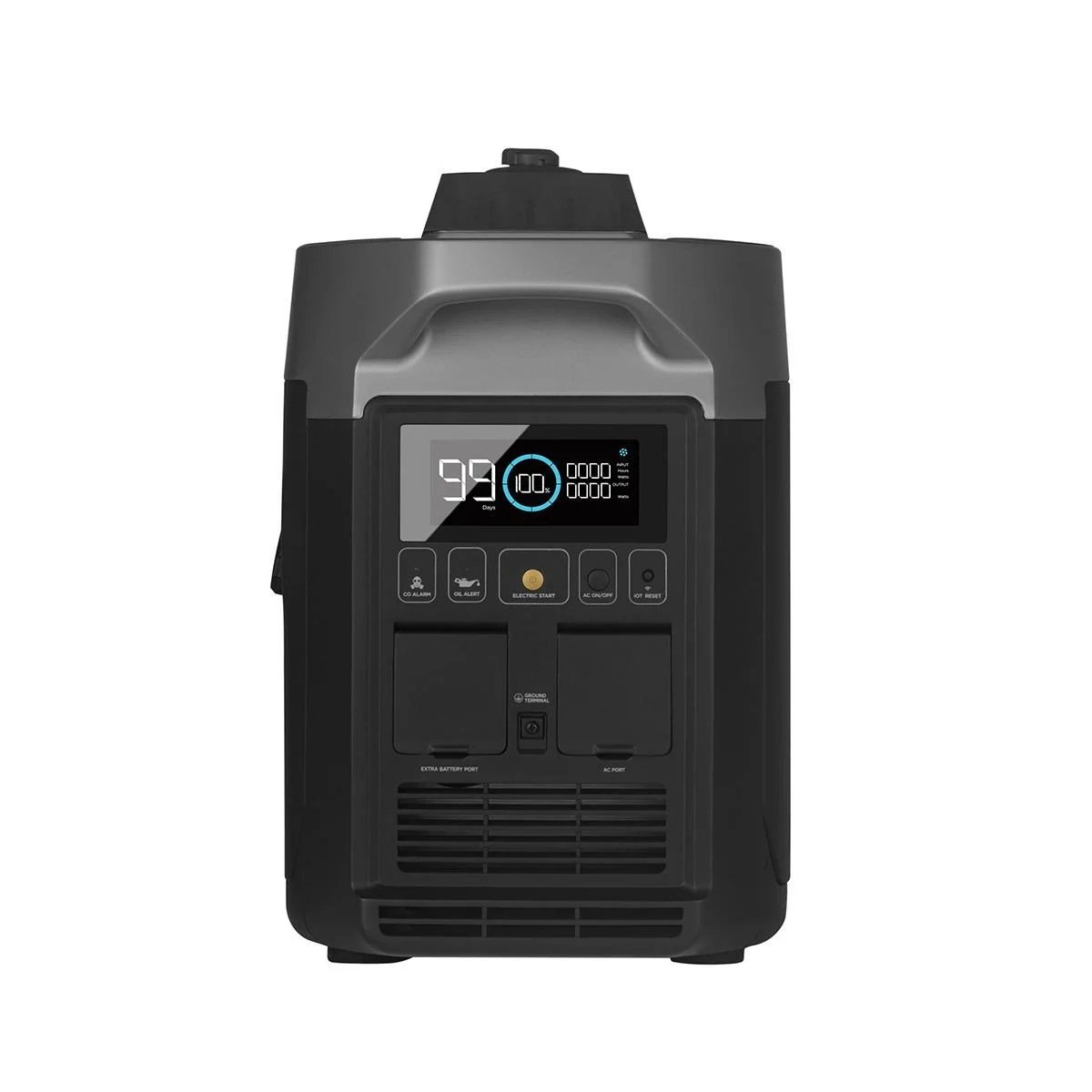
Power outages are more than just an inconvenience; they can disrupt work, spoil food, and even compromise safety. In our increasingly connected world, relying on outdated backup power solutions just doesn't cut it anymore. That's where smart generators come in, offering a blend of robust power, intelligent features, and unparalleled convenience. If you're pondering Choosing the Best Smart Generator for your home, you're looking for more than just a power source; you're seeking peace of mind, automation, and efficiency.
This guide is designed to cut through the jargon and equip you with the knowledge to select a generator that not only meets your power demands but also integrates seamlessly into your modern life.
At a Glance: Your Smart Generator Essentials
- What is "Smart"? Think remote monitoring, automatic startup, clean power for sensitive electronics, advanced safety features, and efficient fuel management.
- Size Matters: Accurately calculate your home's wattage needs, distinguishing between running and starting watts. Overpowering is inefficient, underpowering leaves you in the dark.
- Fuel Options: Consider gasoline for portability, propane for longer storage and cleaner burn, dual-fuel for versatility, or battery/solar for emission-free indoor use.
- Types: From permanently installed home standby units to quiet inverters and versatile portable power stations, each offers unique "smart" advantages.
- Safety First: Always operate fuel-powered generators outdoors, at least 20 feet from your home, and ensure working carbon monoxide detectors are in place.
- Professional Help: For home standby generators and transfer switch installations, professional electricians are non-negotiable for safety and compliance.
What Makes a Generator "Smart," Anyway?
Forget the noisy, clunky generators of yesteryear. A "smart generator" isn't a single type of device but rather a collection of advanced features that elevate backup power from a manual chore to an automated solution. These innovations often include:
- Inverter Technology: Produces cleaner, more stable power (low Total Harmonic Distortion or THD) essential for sensitive electronics like laptops, smartphones, and medical devices.
- Remote Monitoring & Control: Connectivity via Wi-Fi or cellular allows you to check fuel levels, run diagnostics, and even start/stop your generator from an app on your phone, anywhere you have a signal.
- Automatic Start & Transfer: For standby generators, this means seamless power restoration. When grid power drops, the generator detects it, starts automatically, and a transfer switch safely directs power to your home.
- Advanced Safety Features: Integrated Carbon Monoxide (CO) sensors that automatically shut down the engine if hazardous levels are detected, protecting your family.
- Fuel Efficiency Modes: "Low Idle Mode" or variable throttles (common in inverters) adjust engine speed to match power demand, saving fuel and reducing noise.
- Dual-Fuel Capability: The flexibility to switch between gasoline and propane offers more options, especially during emergencies when one fuel type might be scarce.
- Battery Power Stations (Solar Generators): While not traditional fuel-burning generators, these are incredibly smart. They store electricity, are emission-free, silent, and often integrate with solar charging and smart home systems.
In essence, a smart generator prioritizes convenience, safety, efficiency, and the protection of your modern appliances. It's about taking the guesswork and heavy lifting out of managing backup power. For a deeper dive into modern power solutions, be sure to explore Your Power Smart Generator Guide.
Why Invest in a Smart Generator? The Perks of Intelligent Power
Beyond just lighting a few bulbs, a smart generator offers significant advantages:
- Uninterrupted Comfort & Productivity: Maintain essential home functions – heating/cooling, refrigeration, internet, and device charging – ensuring minimal disruption to your daily life, even during extended outages.
- Protection for Sensitive Electronics: Inverter technology delivers clean, stable power, safeguarding your computers, smart TVs, and other delicate electronics from voltage spikes and irregular current that can occur with traditional generators.
- Enhanced Safety: Built-in CO sensors and automatic shutdowns provide crucial protection against the silent, odorless threat of carbon monoxide poisoning, a common risk with improperly used generators.
- Greater Convenience & Peace of Mind: Remote monitoring means no more trudging out in a storm to check on your generator. Automatic startup ensures your power is back on before you even realize it's gone.
- Fuel Efficiency & Cost Savings: Smart generators, especially inverters, adjust their output to match demand, using less fuel than fixed-speed models and saving you money in the long run.
- Increased Home Value: A permanently installed home standby generator can be a significant selling point, appealing to buyers looking for added security and convenience.
Your Blueprint for Power: Sizing Your Smart Generator
This is perhaps the most critical step. An undersized generator won't power what you need, and an oversized one wastes fuel and money. You need to calculate both running watts (what an appliance uses continuously) and starting watts (the brief surge of power some appliances need to kick on).
How to Calculate Your Needs:
- List Your Essentials: Identify every appliance and device you absolutely need to run during an outage. Think refrigerator, freezer, sump pump, well pump, furnace fan, essential lighting, charging stations, and maybe a microwave or coffee maker.
- Find the Wattage: Look for the wattage (W) listed on the appliance's data plate or in its owner's manual. If it's only listed in amps (A), multiply amps by volts (V) (e.g., 10A x 120V = 1200W).
- Account for Starting Watts: Many motor-driven appliances (refrigerators, pumps, AC units) require 2-3 times their running wattage to start.
- Example: A refrigerator might run at 600 watts but need 1800 watts to start. A sump pump could need 750-1500 running watts.
- Total It Up:
- Add the running watts of all appliances you want to run simultaneously.
- Identify the highest starting wattage among your selected appliances.
- Your required generator running watts = Total Running Watts + Highest Starting Watts (minus that appliance's running watts).
Typical Home Needs (Rough Estimates): - Small Generator (2,000-3,500 watts): Essential lighting, phone charging, a few small appliances (e.g., microwave), and maybe a refrigerator. Good for camping or minimal backup.
- Mid-Size Generator (3,500-7,500 watts): Refrigerator, freezer, sump pump, furnace fan, lights, TV, computer, and a few small kitchen appliances. Covers most critical circuits.
- Large Portable/Small Standby (7,500-12,000 watts): Can handle major appliances like central AC (smaller units), well pumps, and most household essentials.
- Whole-Home Standby (12,000-22,000+ watts): Powers nearly everything in an average-sized home, including large central air conditioning units, seamlessly.
Expert Tip: When in doubt, err slightly on the side of a larger generator, especially if you foresee needing to power more items in the future. However, don't go overboard, as larger units cost more, consume more fuel, and are heavier.
Fueling Your Future: Generator Fuel Types
The choice of fuel directly impacts convenience, runtime, storage, and emissions.
- Gasoline:
- Pros: Readily available, high energy density (more power per gallon).
- Cons: Degrades quickly (requires stabilizer), produces CO emissions, flammability risks, can be hard to find during widespread outages.
- Best For: Portable use, short-duration outages.
- Propane (LPG):
- Pros: Stores indefinitely without degradation, cleaner-burning (fewer emissions), safer to store than gasoline, often used by standby generators via home's main supply.
- Cons: Lower energy density (burns faster, requires larger tank for comparable runtime), tanks can be heavy.
- Best For: Dual-fuel portable generators, permanent home standby systems.
- Natural Gas:
- Pros: Unlimited supply (if you have a utility line), no refueling necessary, very clean-burning.
- Cons: Requires professional installation to connect to home's gas line, not portable, utility service can be interrupted during severe disasters.
- Best For: Home standby generators.
- Dual-Fuel (Gasoline & Propane):
- Pros: Offers flexibility, choose the most available or convenient fuel. Propane for longer storage, gasoline for quick starts.
- Cons: Generators tend to be slightly more complex and heavier.
- Best For: Versatile portable and inverter generators.
- Battery/Solar Power Stations:
- Pros: Zero emissions, silent operation, safe for indoor use, can be recharged via solar panels for continuous off-grid power, clean power for electronics.
- Cons: Limited power output compared to fuel generators, must be recharged, typically higher upfront cost for comparable capacity.
- Best For: Apartments, camping, sensitive electronics, quiet backup, sustainable power.
Understanding Your Options: Types of Smart Generators
Each type of generator offers different advantages and levels of "smart" integration:
1. Home Standby Generators
- Description: Permanently installed outside your home, these are the ultimate "set it and forget it" smart power solution. They run on natural gas or propane, have a dedicated fuel line, and automatically kick on when grid power fails.
- Smart Features: Automatic start/stop, self-diagnosis, maintenance alerts, often remote monitoring via smartphone apps.
- Output: Typically 5,000 to 22,000+ watts, capable of powering an entire home.
- Pros: Seamless, automatic backup; unlimited natural gas supply (if applicable); safer fuel (propane); increases home resale value.
- Cons: Most expensive (including installation), requires professional installation and permits.
- Cost: $2,000-$7,000 (unit only); installation can double the price.
2. Portable Generators (Traditional)
- Description: Moveable units, usually running on gasoline or dual-fuel. While less "smart" than other types, newer models often include electric start, digital displays, and CO safety features.
- Smart Features: Electric push-button start, digital control panels, CO safety sensors.
- Output: 3,000 to 8,500 watts.
- Pros: Lower cost, versatile for home or job site, no installation expense.
- Cons: Requires manual start, fuel storage, generally louder, produces CO (must be used outdoors, 20 feet from home).
- Cost: $400-$3,000.
3. Inverter Generators
- Description: A sub-type of portable generator that's inherently "smarter." They use a sophisticated engine and alternator system to produce clean, stable AC power (low THD). They also throttle engine speed up or down to match demand, making them quieter and more fuel-efficient.
- Smart Features: Clean power for sensitive electronics, "Low Idle Mode" for fuel conservation, often remote start, digital displays, parallel capability (connecting two inverters for more power).
- Output: 900 to 7,600 watts.
- Pros: Much quieter, more fuel efficient, lower emissions, clean power (safe for sensitive electronics).
- Cons: Generally more expensive than traditional portable generators of comparable output, still requires CO safety precautions.
- Cost: $400-$5,000.
4. Portable Power Stations (Battery/Solar Generators)
- Description: Large, rechargeable batteries with an integrated inverter and various outlets. They store electricity and can be charged via a wall outlet, car, or solar panels. These are perhaps the "smartest" in terms of digital integration and environmental friendliness.
- Smart Features: Silent operation, zero emissions, app connectivity for remote monitoring, integrated UPS functionality (for seamless power transfer), advanced battery management systems (LiFePO4).
- Output: 1,800 to 6,000 watts.
- Pros: Extremely quiet, no fuel or CO emissions (can be used indoors!), no maintenance, clean power.
- Cons: Limited wattage for heavy loads, finite capacity (must be recharged), can be heavier than small inverters, higher cost per watt-hour.
- Cost: $1,500-$4,000.
Essential Smart Features to Look For
When you're comparing models, these features distinguish a truly smart generator:
- Automatic CO Shutoff: Absolutely critical. The engine automatically shuts down if carbon monoxide levels reach dangerous thresholds. Look for ANSI/UL2201 or ANSI/PGMA G300 certification for assurance.
- Remote Start/Electric Start: Electric start (push-button) is a huge convenience, especially on larger portables. Remote start takes it a step further, letting you power up from inside your home.
- Automatic Transfer Switch (ATS) Ready: For portable and especially home standby units, an ATS senses power loss and automatically switches your home's power source to the generator, then back to the grid when it returns.
- Clean Power (Low THD): If you plan to power electronics, look for generators with <5% THD (Total Harmonic Distortion), ideally <3% for sensitive devices. Inverter generators excel here.
- Fuel Sense Technology (for Dual-Fuel): Some advanced dual-fuel models can automatically switch between gasoline and propane, optimizing fuel use and runtime.
- Digital Control Panel/Display: Provides real-time information on power output, fuel levels, runtime, and maintenance alerts. App connectivity takes this to the next level.
- Low-Oil Shutoff: Prevents engine damage by automatically shutting down if oil levels drop too low. This is a standard but important safety and longevity feature.
- Multiple Outlets with GFCI: Ensures you have enough connection points and ground-fault circuit interrupter protection for safety.
Top Smart Generator Picks for Uninterrupted Power
Based on performance, features, and user experience, here are some top-rated generators that embody "smart" capabilities:
1. Pulsar 9500W Dual-Fuel Inverter Generator (Best Dual-Fuel Inverter)
- Smart Factor: Super quiet inverter technology for clean power, dual-fuel flexibility, remote start, electric start, digital control panel, and a CO safety sensor for peace of mind.
- Power: Up to 9500 watts peak on gas, 8550 watts on LPG.
- Noise: 62 dBA – impressively quiet for its power.
- Runtime: Up to 9.5 hours at half load (6.9-gallon tank).
- Pros: Extremely quiet, long runtime, versatile fuel options, comprehensive safety features.
- Cons: Heavy design (281 lbs) means it's not easily moved without assistance.
2. A-iPower 7600W Dual-Fuel Inverter Generator (Best Fuel-Switching Efficiency)
- Smart Factor: Inverter clean power (<3% THD), automatic Fuel Sense Technology for seamless switching between gasoline and propane, making fuel management effortless, plus remote start.
- Power: 7,600 starting watts on gas, 6,900 on propane.
- Engine: 322cc OHV.
- Noise: 62dB.
- Runtime: Up to 21.2 hours combined (Fuel Sense Technology).
- Pros: Automatic fuel switching, compact and portable design with telescoping handle, quiet operation, clean power for all electronics.
- Cons: Power output might be limited for heavy whole-home loads.
3. GENMAX 6000W Dual-Fuel Inverter Generator (Best Lightweight Dual-Fuel)
- Smart Factor: Inverter technology for clean power (<3% THD), remote start, "Low Idle Mode" for fuel conservation and reduced noise, and built-in CO Detect for essential safety.
- Power: 6000 peak watts, 5250 running watts.
- Engine: 312cc OHV.
- Noise: 62 dBA.
- Pros: Quiet performance, convenient remote start, highly fuel-efficient, compact and portable at only 118 pounds.
- Cons: Smaller 3.6-gallon fuel tank capacity means more frequent refueling.
4. Jackery HomePower 3000 (Best Smart Battery Backup)
- Smart Factor: This is a truly "smart" portable power station. Features an integrated UPS system (<20ms reaction time) for seamless power, LiFePO4 battery for longevity, ChargeShield 2.0 technology for fast/safe charging, and multiple charging options (hybrid AC/DC, solar, wall, car).
- Power: 3600W output, 7200W surge capacity.
- Capacity: 3072Wh.
- Recharge Time: Ultra-fast 1.7 hours via hybrid AC/DC.
- Lifespan: Up to 4,000 charge cycles, offering years of reliable power.
- Pros: Fast recharge, UPS function, very long battery lifespan, lightweight, silent, clean energy, safe for indoor use.
- Cons: Limited overall wattage compared to fuel generators, may struggle with very heavy appliances like central AC.
5. DuroMax XP13000HX Dual-Fuel Generator (Best Whole-Home Power)
- Smart Factor: While a traditional portable, its high output and dual-fuel flexibility, combined with an electric push-button start, intuitive control panel, and a crucial CO Alert sensor (with automatic shutdown), make it a smart choice for robust backup. It also includes a 50-amp port, making it ready for a home transfer switch.
- Power: Up to 13,000 watts.
- Engine: 500cc OHV.
- Pros: Very high output capable of powering most homes, dual-fuel flexibility, CO Alert safety system, transfer switch ready for easier home integration, durable build.
- Cons: Heavy (245 pounds) for frequent transport, louder than inverter models.
Beyond the Purchase: Installation & Safety First
Choosing the right smart generator is only half the battle. Proper installation and diligent safety practices are paramount.
Generator Safety Guidelines:
- Location, Location, Location: ALWAYS operate fuel-powered generators outdoors in a well-ventilated area, at least 20 feet from your home, windows, and doors. Direct exhaust away from any structures. Carbon monoxide is deadly and odorless.
- Carbon Monoxide Detectors: Ensure you have working, battery-operated (with fresh batteries) or hardwired CO detectors in your home, especially near sleeping areas. This is non-negotiable.
- No Enclosed Spaces: Never run a generator in a garage, shed, carport, or any partially enclosed space.
- Refueling Safety: Turn off the generator and allow it to cool completely before refueling. Spilled fuel on a hot engine can ignite.
- Proper Cords: Use heavy-duty, outdoor-rated extension cords that are the correct gauge for the power load. Never run cords under rugs or through doorways where they can be pinched or damaged.
- Grounding: Most generators require proper grounding to prevent electrical shock. Follow manufacturer instructions.
- UL2201 or PGMA G300 Certification: Consumer Reports (CR) strongly recommends portable generators that pass expanded CO safety technology tests, marked by these certifications, as they are proven to shut down automatically before CO levels become critical.
Connecting to Your Home: Transfer Switches and Interlock Kits
To safely power hardwired appliances (like your furnace, well pump, or specific lighting circuits) from a portable or even a standby generator, you'll need one of these:
- Transfer Switch: This device is installed next to your main electrical panel by a licensed electrician. When installed with a portable generator, it allows you to safely connect the generator to specific circuits via a single heavy-duty cable. For home standby generators, the transfer switch is automatic – detecting outages and seamlessly switching power sources. It prevents dangerous "backfeeding" of electricity into the utility grid, which can injure utility workers.
- Installation: Professional electrician ($500-$900).
- Compatibility: Most require a generator of 5,000 watts or more (for 220-volt input).
- Interlock Kit: A less expensive alternative ($100-$200 less than a transfer switch) that works by mechanically preventing you from turning on both the main utility breaker and the generator breaker at the same time. This also prevents backfeeding and allows your generator to power any circuit in your panel, up to its capacity.
- Installation: Also requires a licensed electrician.
Why Professional Installation? An improperly installed generator or transfer switch can lead to electrocution, fire, or damage to your home's electrical system, and can put utility workers at severe risk. Don't DIY this crucial step.
Common Questions About Smart Generators
- How long can a smart generator run continuously?
It varies by model, fuel tank size, and load. Gasoline generators typically run 8-12 hours at half load. Propane can run longer if connected to a large tank. Standby generators can run for days as long as their fuel supply (natural gas or large propane tank) holds out. Battery power stations depend on their capacity and the load, usually a few hours to a day for essential items. - Are smart generators truly quieter?
Inverter generators are significantly quieter than traditional portable generators because their engines don't constantly run at full speed. They throttle up or down as needed, often producing noise levels similar to a normal conversation (around 50-65 dBA). Battery power stations are silent. - Can I run sensitive electronics directly from any generator?
Only if the generator produces "clean power" with low Total Harmonic Distortion (THD), typically 5% or less, ideally 3% or less. Inverter generators are designed for this. Traditional portable generators can produce "dirty power" that may damage delicate electronics. Always check the THD specification. - What maintenance does a smart generator require?
Regular maintenance is key for longevity. This includes checking oil levels, changing oil and filters, inspecting spark plugs, and fuel system checks. For fuel-powered generators, stabilize fuel or drain it for long-term storage. Standby generators often have self-diagnostic features and maintenance reminders. - Is natural gas or propane better for a home standby generator?
If you have a natural gas line, it's generally preferred for standby generators as it provides an uninterrupted fuel supply without needing refueling. Propane is an excellent alternative if natural gas isn't available, but requires an external tank that needs to be refilled.
Making Your Smart Choice for Uninterrupted Power
Choosing the Best Smart Generator involves a thoughtful assessment of your specific needs, budget, and priorities. Whether you lean towards the automatic, whole-home convenience of a standby unit, the quiet efficiency of an inverter, or the silent, emission-free power of a battery station, the market offers more intelligent options than ever before.
Start by accurately sizing your power needs. Then, consider your preferred fuel type, desired smart features like remote monitoring and automatic transfer, and, critically, your commitment to safety. With the right smart generator, you won't just be buying backup power; you'll be investing in comfort, security, and true peace of mind for you and your family.