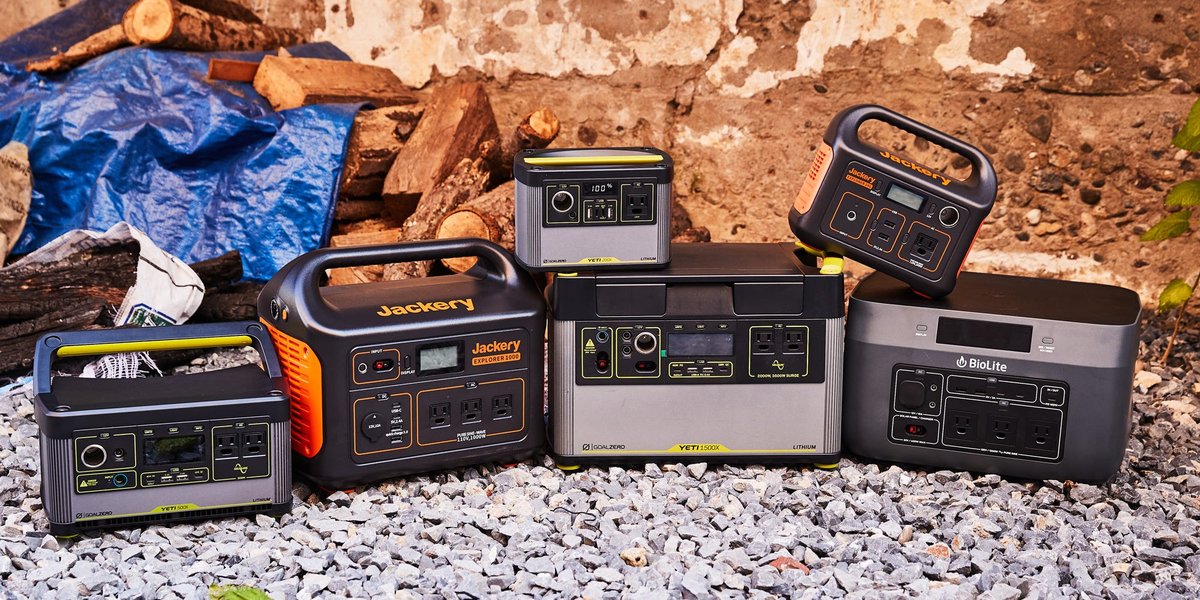
Imagine a world where power outages don't leave you fumbling in the dark, where your off-grid adventures are powered by silence, not fumes, and where your tools hum along on a construction site without a constant fuel budget. This isn't a futuristic dream; it's the reality offered by today's sophisticated Solar & Renewable Smart Generator Options. These portable power stations are rapidly transforming how we think about energy, offering a clean, quiet, and incredibly versatile alternative to traditional power sources.
As a journalist who’s spent years tracking the pulse of renewable energy, I’ve seen these smart generators evolve from niche gadgets to essential tools for homes, businesses, and adventurers alike. They're more than just backup batteries; they're integrated, intelligent systems designed to capture, store, and convert the sun's abundant energy into usable electricity, precisely when and where you need it most.
At a Glance: What You'll Learn About Smart Solar Generators
- Clean, Quiet Power: Solar generators offer an emission-free, silent alternative to noisy, polluting gas generators, making them safe for indoor use.
- Core Components: Understand the battery (your energy reservoir), inverter (conversion engine), solar panel (energy harvester), and charge controller (regulatory core).
- Smart Charging: Discover how series and parallel panel connections optimize charging for different scenarios.
- Versatile Applications: From emergency home backup to off-grid living and mobile job sites, these generators power a wide array of needs.
- Key Buying Factors: Learn what to look for in terms of capacity, battery type (LiFePO4 for the win!), solar panel compatibility, and portability.
- Real-World Examples: Get insights into popular models and their best-fit scenarios.
- Solar vs. Gas: A clear comparison to help you choose the right power for your needs.
The Quiet Revolution: Why Smart Generators Are the Future of Power
For decades, gas generators were the go-to for backup power, but their noise, fumes, and constant refueling requirements were major drawbacks. Enter the solar-powered generator, or portable power station. These integrated systems are clean, whisper-quiet, and entirely emission-free, making them safe for indoor use. They’re providing reliable backup power for homeowners, essential off-grid energy for remote cabins, and critical juice for professional field teams and emergency managers.
Think of it as a personal, portable power grid. You harvest the sun's energy, store it efficiently, and then deploy it to run everything from your refrigerator during an outage to your power tools on a remote job site. No more last-minute runs for gasoline, no more carbon monoxide worries, just pure, reliable power on demand.
Deconstructing Your Power Partner: What Makes a Solar Generator "Smart"?
At its heart, a solar smart generator is a marvel of energy engineering, combining several crucial components into one cohesive unit. Understanding these parts helps you appreciate their capabilities and make informed decisions.
1. The Battery: Your Energy Reservoir
This is the muscle of your generator, storing the energy it collects. Modern solar generators overwhelmingly rely on high-density lithium technology, particularly Lithium Iron Phosphate (LiFePO4). Why LiFePO4? It's celebrated for its exceptional lifespan (often 2,500-4,000+ charge cycles, compared to 500-1000 for older lithium-ion), faster charging capabilities, and enhanced safety. The battery's capacity (measured in Watt-hours, Wh, or Kilowatt-hours, kWh) dictates how much power your system can store and, crucially, how long it can run your appliances.
2. The Inverter: Your Conversion Engine
Solar panels and batteries produce Direct Current (DC) electricity, but most of your home appliances, power tools, and gadgets run on Alternating Current (AC) – the kind you get from wall outlets (120V or 240V). The inverter is the unsung hero that takes the battery's stored DC energy and flawlessly converts it into usable AC power. A "pure sine wave" inverter, standard in quality smart generators, ensures clean, stable power that's safe for sensitive electronics.
3. The Solar Panel: Your Energy Harvester
Also known as a Photovoltaic (PV) module, this is where the magic begins. Solar panels capture sunlight and convert it directly into electrical energy. Most smart generators come with options for foldable, portable panels, making them easy to set up and adjust for optimal sun exposure, whether you're camping or setting up an emergency power station.
4. The Solar Charge Controller: Your Regulatory Core
This often-overlooked component is vital for the health and longevity of your battery. The solar charge controller acts as a sophisticated traffic cop, managing and stabilizing the energy flow from your solar panels to the battery. It optimizes the charging process (often using Maximum Power Point Tracking, or MPPT, technology) and protects against overcharging, over-discharging, and voltage fluctuations. This meticulous regulation is key to maximizing your system's lifespan and efficiency.
Maximizing Your Harvest: Smart Solar Panel Connections
When it comes to charging your smart generator with solar panels, how you connect those panels makes a significant difference in charging speed and efficiency.
- Series Connection (The Voltage Booster): Imagine connecting a string of Christmas lights end-to-end. In a series connection, the positive terminal of one panel connects to the negative terminal of the next. The result? The voltage of each panel adds up, while the amperage (current) remains constant. This setup is highly efficient for MPPT charge controllers and reduces current loss over long cable runs, leading to faster charging, especially when your panels are set up a distance from your generator.
- Analogy: Think of it like a higher-pressure water hose – it can push more water (power) through a given pipe (cable) without much loss.
- Parallel Connection (The Amperage Booster): Here, all positive terminals connect together, and all negative terminals connect together. This setup adds up the amperage from each panel, while the voltage remains constant. The big advantage of parallel connections shines in situations with partial shading. If one panel in a parallel array gets shaded, it minimally impacts the output of the others, unlike in a series setup where a single shaded panel can drastically reduce the output of the entire string.
- Analogy: This is like having multiple, separate garden hoses each supplying water – if one gets a kink, the others keep flowing strongly.
Many modern smart generators and charge controllers can handle both configurations, giving you the flexibility to optimize your solar input based on your specific environment and needs.
Where Smart Generators Shine: Versatile Applications for Modern Life
The utility of solar smart generators spans far beyond just emergency backup. Their portability, clean power, and quiet operation make them indispensable across a wide range of scenarios.
Emergency Preparedness & Home Backup
When the grid goes down, a smart generator becomes your lifeline. It can safely power critical devices indoors, such as lights, refrigerators (keeping food fresh), and essential medical equipment like CPAP machines. Unlike gas generators, there's no carbon monoxide risk, allowing you to breathe easy while maintaining vital functions during an outage. For more comprehensive solutions, you can also Learn about Power Smart Generators designed for more extensive home integration.
Off-Grid Living & Remote Power
For cabins, tiny homes, RVs, or remote workshops, smart generators offer scalable, independent power. They liberate you from utility bills and the need for constant refueling, providing a sustainable and quiet energy source for true self-sufficiency. Imagine living off the land, powered by the sun.
Outdoor, Mobile Use & Job Sites
From camping and tailgating to construction sites and disaster relief efforts, these generators power tools, lighting, and communication equipment without the noise, fumes, or fire hazards associated with gasoline. They're built tough for the outdoors, often featuring rugged designs and weather resistance, ensuring your mobile operations run smoothly and safely.
Choosing Your Power Partner: Key Considerations When Shopping for a Smart Generator
Navigating the market for a solar smart generator can feel overwhelming with the sheer number of options. Here's what you need to consider to ensure you pick the perfect power partner for your needs:
1. Capacity: How Much Power Do You Really Need?
This is perhaps the most critical factor. Capacity is measured in Watts (W) for instantaneous power delivery and Watt-hours (Wh) or Kilowatt-hours (kWh) for energy storage over time.
- Watts: Indicates how many appliances you can run simultaneously. A generator with a 2,000W output can handle appliances totaling 2,000W at any given moment.
- Watt-hours: Tells you how long it can run those appliances. For example, a 200-watt refrigerator running for 10 hours needs 2,000 Wh (200W x 10h).
Small generators might offer around 250 Wh, while larger, whole-home units can exceed 3,000 Wh, often expandable into dozens of kWh. A good rule of thumb: list all the devices you want to power, note their wattage, and estimate how long you'll run them to calculate your total Wh requirement. Don't forget to factor in "surge" wattage for appliances with motors (like refrigerators), which briefly draw more power when starting up.
2. Solar Panel Compatibility: Charging Speed Matters
While most units can charge from a wall outlet (often the fastest initial charge), solar panel input is crucial for extended outages or off-grid use. Look for:
- Input Wattage: Higher input wattage means faster solar charging. At least 100-watt solar panels are recommended, and many systems allow "daisy-chaining" (connecting multiple panels) to accelerate the process significantly.
- Voltage Range: Ensure your chosen panels' voltage matches the generator's input specifications.
- Connector Type: Most portable panels use standard MC4 connectors, but check if adapters are needed.
3. Battery Type: LiFePO4 for the Long Haul
As mentioned, LiFePO4 (Lithium Iron Phosphate) batteries are the gold standard for smart generators due to their:
- Longevity: Significantly more charge cycles (2,500-4,000+) than traditional lithium-ion.
- Safety: More stable chemistry, less prone to overheating.
- Performance: Reliable power delivery and often faster charging.
While older lithium-ion units are common, and solid-state is an emerging (though often bulkier) technology, prioritize LiFePO4 for the best blend of performance, lifespan, and value. Keep in mind that performance can slightly decline in extreme cold, so consider insulated options or indoor placement in freezing conditions.
4. Portability: Power on the Go
Smart generators range widely in weight, from compact 10-pound units to robust systems weighing over 100 pounds. Generally, higher capacity correlates with greater weight. If you plan to move your generator frequently, look for:
- Integrated Wheels: A game-changer for heavier units.
- Telescoping Handles: Makes transport much easier, akin to rolling luggage.
- Ergonomic Design: Comfortable handles for lifting shorter distances.
5. Charging Options: Versatility is Key
Beyond solar, most smart generators offer:
- Wall Outlet (AC): Often the fastest charging method for a quick top-up.
- Car Battery (DC): Useful for charging on the move or in your vehicle.
- Other Inputs: Some units might offer USB-C Power Delivery (PD) for faster charging from compatible sources.
Real-World Examples: A Glimpse at Leading Solar Smart Generators
The market is rich with innovative solar generators, each designed with specific use cases in mind. Here's a look at some popular options and their standout features:
- Jackery (e.g., Explorer 3000 Pro): With capacities like 3,072 Wh, offering high power output (e.g., up to 3,600W, 7,200W surge) in a relatively portable (around 60 lbs for this size) mid-size package, Jackery units are ideal for extended outages, capable of running a full-size refrigerator for days. They typically use LiFePO4 batteries, charging quickly (e.g., >2 hours via wall and <11 hours via solar).
- EcoFlow River Series (e.g., River 2 Pro, 768 Wh capacity): Compact and lightweight, EcoFlow's River series is perfect for outdoor enthusiasts. They can charge small electronics, run a mini-fridge for several hours, and boast incredibly fast wall charging (often 0-80% in under an hour).
- Anker 757 PowerHouse (1,229 Wh capacity): A robust mid-sized option with numerous ports (6 AC, 4 USB-A, 2 USB-C) and rapid LiFePO4 battery charging (80% in <1 hour via wall outlet), making it suitable for moderate energy needs, from family camping to home office backup.
- Goal Zero Yeti 500X (505 Wh capacity): Designed with outdoor adventurers in mind, Yeti models often feature IPX4 water-resistant ratings and stable performance across extreme temperatures. Many newer models, like the Yeti 500, now feature upgraded LiFePO4 batteries with extended lifespans (e.g., 4,000 cycles).
- Bluetti EB3A (268 Wh capacity): An ultra-compact (around 10 lbs) and fast-charging LiFePO4 unit, ideal for car camping, powering essential devices, and even features a wireless charging pad and an integrated LED light with strobe for emergencies.
- GB2000 (2,106 Wh capacity): Built for durability on job sites, this unit often includes parallel ports to double output and handy storage pockets for cords. While some models use lithium-ion batteries with shorter lifespans (e.g., 1,000 cycles), their ruggedness is a major draw.
- Anker Solix F3800 (3.84 kWh capacity): Moving into whole-house backup territory, this powerful unit is expandable up to a massive 53.76 kWh with additional batteries. Using LiFePO4 technology, it can even integrate with a home panel for automatic power switchover to specific circuits during outages, bridging the gap between portable and whole-home standby systems.
- EcoFlow Delta Pro Ultra (7,200W output): One of the most powerful home backup solutions available, scalable up to an astounding 90,000 watts. This system includes both a robust battery and inverter for 240V AC power, features a Smart Home Panel 2 for automatic circuit switchover during outages, and offers an intuitive app for comprehensive monitoring and programming.
Solar vs. Gas: The Clean Power Advantage
When evaluating your power options, the choice often comes down to solar or gas. Each has its strengths, but smart solar generators clearly stand out for certain needs.
| Feature | Solar & Renewable Smart Generator | Traditional Gas Generator |
|---|---|---|
| Noise Level | Whisper-quiet, virtually silent | Very noisy, disruptive |
| Emissions | Zero emissions, clean air | Harmful fumes (carbon monoxide, CO2), pollutants |
| Fuel | Renewable sunlight (free), grid power, car DC | Gasoline (expensive, perishable, supply chain dependent) |
| Safety | Safe for indoor use (no fumes, fire risk) | Must be used outdoors (carbon monoxide poisoning risk) |
| Maintenance | Minimal (keep panels clean, battery charged) | Regular oil changes, spark plugs, fuel stabilizers, winterizing |
| Portability | Highly portable, lighter for capacity, some with wheels | Heavier, bulky, less portable for comparable output |
| Power Output | Typically <3,000 watts (portable), up to 10,000+ watts (home systems) | Typically 3,000-10,000+ watts (portable), 20,000+ watts (standby) |
| Cost | Higher upfront, zero "fuel" cost | Lower upfront, ongoing and significant fuel costs |
| Auto Switchover | Some advanced models offer smart home panel integration | Common with standby models |
| When to Choose Solar: |
- For power needs under 3,000 watts (most portable scenarios).
- When quiet operation is paramount (camping, residential areas, indoors).
- When environmental impact is a concern.
- For reliable, emission-free indoor backup power for critical devices.
- For off-grid living where fuel access is limited or undesirable.
When to Choose Gas (or Hybrid): - For very large, continuous power demands (10,000+ watts for extended periods) that exceed typical portable solar generator capacity.
- If your budget doesn't allow for the higher upfront cost of a powerful solar setup.
- For specific industrial applications where fuel is readily available and noise isn't an issue.
It's clear that for most home backup, recreational, and mobile work scenarios, solar smart generators offer a superior, safer, and more sustainable solution.
Beyond the Basics: Frequently Asked Questions
How long do solar generators typically last?
The lifespan of a solar generator is primarily dictated by its battery. With advanced LiFePO4 batteries, you can expect 2,500 to 4,000+ full charge and discharge cycles. This translates to many years, potentially a decade or more, of reliable use under normal conditions. The other components (inverter, charge controller) are generally very durable and designed to last just as long.
Can a solar generator truly power an entire house?
While many portable solar generators are designed for critical circuits and smaller loads, advanced systems like the Anker Solix F3800 or EcoFlow Delta Pro Ultra are indeed built for whole-house backup. These high-capacity units can integrate with your home's electrical panel (via a Smart Home Panel or transfer switch) to automatically power specific circuits or even your entire home, offering seamless transition during outages. They can be expanded with additional batteries to achieve significant energy storage, rivaling the capabilities of many standby gas generators, but with clean energy.
What happens on cloudy days or at night?
This is where the "storage" aspect of a solar generator becomes critical. On cloudy days, your solar panels will still generate power, albeit at a reduced rate. At night, or when solar input is insufficient, your generator runs on the energy stored in its battery. This is why having adequate battery capacity is crucial – it acts as your buffer, ensuring continuous power even when the sun isn't shining. Many users will fully charge their generator from a wall outlet when grid power is available, then rely on solar to top it off or for extended off-grid use.
Your Next Step Towards Energy Independence
The world of Solar & Renewable Smart Generator Options is exciting, offering unparalleled freedom and resilience in an increasingly unpredictable world. Whether you're safeguarding your home against outages, embracing the freedom of off-grid living, or powering your work in remote locations, there's a smart generator perfectly suited to your needs.
By understanding the core components, knowing what features to prioritize, and exploring the diverse applications, you're now equipped to make an informed decision. Start by evaluating your specific power requirements – how many watts do your essential devices draw, and for how long? From there, you can narrow down the vast array of options to find the ideal clean, quiet, and reliable power partner. The sun is waiting; it's time to harness its power.